头部背景图片

Six Major Reasons for the Corrosion of Industrial Chillers

2025-04-28

With the continuous advancement of technology, industrial chillers have found increasingly widespread applications in various industrial fields. They play a crucial role in ensuring the efficient operation of industrial production and enhancing product quality. However, as mechanical equipment, industrial chillers are inevitably prone to certain issues during long - term operation. One of the common problems is equipment corrosion. To effectively prevent the corrosion of industrial chillers and extend their service life, Hengde Company elaborates on the six major common causes of chiller corrosion and provides corresponding preventive measures.


1. Corrosion Issues Caused by Unreasonable Engineering Construction, Design, and Installation

Some factories, especially when selling ordinary industrial chillers, cut corners to reduce costs and neglect essential anti - corrosion and anti - rust treatments. Once customers expose the chiller to the outdoor environment for an extended period, the equipment shell is highly susceptible to corrosion. This corrosion risk resulting from the neglect of anti - corrosion measures in the early construction and installation stages can severely affect the normal operation and service life of the chiller.


Preventive Measures: When purchasing equipment, choose suppliers with good reputations and quality guarantees to ensure that the chiller has undergone comprehensive anti - corrosion and anti - rust treatments before leaving the factory, such as spraying high - quality anti - corrosion paint and using corrosion - resistant materials for the shell. Before installation, assess the installation environment and avoid placing the equipment in humid, dusty, or corrosive gas environments. If outdoor installation is unavoidable, build a protective shed to shield the equipment.

Industrial Chillers


2. System Pipeline Corrosion Caused by Incorrect Installation or Abnormal Operation of the Water Processor

In water cooled chillers, the cooling water pipeline is a key passage for cooling water circulation. The quality of the water directly determines whether scale and rust will form in the system pipelines. If the water processor is installed improperly or operates abnormally, it cannot effectively treat the water quality, thereby triggering pipeline rust. This not only reduces the heat exchange efficiency of the chiller but may also lead to pipeline blockages, affecting the stable operation of the entire system.


Preventive Measures: Before installing the water processor, strictly follow the product manual for correct installation and conduct debugging after installation to ensure its normal operation. Regularly maintain and service the water processor, checking whether all its functions, such as filtration, sterilization, and descaling, are normal. Meanwhile, regularly test the cooling water quality and adjust the operating parameters of the water processor or replace consumables like filter elements in a timely manner according to the water quality conditions.


3. Insufficient Filtration of Fine Impurities by Y - type Filters

Currently, the commonly used dirt removers in industrial chillers are mostly Y - type filters. They have the advantages of easy installation and convenient dirt cleaning and can conduct preliminary rough filtration of mechanical impurities, iron filings, and sand grains. However, their filtration effect on tiny impurities is unsatisfactory. As the unit operates for a long time, the condenser is extremely likely to accumulate dirt, sludge, and other impurities. These deposits not only reduce the heat transfer performance of the condenser but may also accelerate the equipment's corrosion process due to the formation of a local corrosion environment.


Preventive Measures: Based on the Y - type filter, add a precision filter to conduct more refined filtration of tiny impurities. Regularly clean and maintain the Y - type filter and the precision filter, and promptly remove the impurities inside the filters. At the same time, regularly clean the condenser. Chemical cleaning or physical cleaning methods can be used to remove the dirt and deposits inside the condenser and maintain its good heat transfer performance.

Water Chillers


4. Absence of a Quick Drain Valve in the Chilled Water System

The quick drain valve plays an important role in draining in the chiller or chilled water system. It has a simple structure, good sealing performance, small size, and light weight, and is especially suitable for regular draining of the system. It also has the advantages of corrosion resistance, impact resistance, and long service life. However, currently, many industrial chiller end plates in enterprises do not have a quick drain valve installed, which is likely to cause system pipeline corrosion. During the daily operation of the chiller, it is recommended to open and close the drain valve three times a week to ensure smooth system drainage and maintain the good operation of the system.


Preventive Measures: For chilled water systems that have not installed a quick drain valve, install a quick drain valve that meets the system requirements as soon as possible. In daily use, strictly follow the recommended operation frequency to open and close the drain valve to ensure that impurities and dirt in the system are discharged in a timely manner. At the same time, regularly check the sealing performance and working status of the drain valve and replace it promptly if it is damaged.


5. Absence of a Water Meter in the Cooling System Makeup Water Pipeline

In the water quality treatment process of the cooling system, chemicals and bactericides are usually used to kill fungi, microorganisms, and remove various dirt inside the pipeline. The dosage of the chemicals needs to be accurately adjusted according to the makeup water volume and the system water volume. If there is no water meter installed in the cooling system makeup water pipeline, it is impossible to accurately measure the makeup water volume, resulting in inaccurate chemical dosing. Excessive dosing may cause chemical corrosion of the pipeline, while insufficient dosing cannot effectively inhibit the growth of microorganisms and the formation of dirt, also triggering system pipeline corrosion problems.


Preventive Measures: Install a water meter with appropriate accuracy in the cooling system makeup water pipeline to accurately measure the makeup water volume. According to the system water volume and makeup water volume, accurately calculate the dosage of the chemicals according to the chemical usage instructions. At the same time, regularly test the water quality of the cooling system and adjust the dosage and type of the chemicals in a timely manner according to the test results to ensure that the water quality is in a good state.

Industrial Chiller


6. Corrosion of the Equipment Surface by Acidic and Alkaline Gases in the Environment

During factory production, some special gases, such as acidic and alkaline gases, are inevitably generated. These gases flowing in the environment can cause erosion damage to the equipment surface. Therefore, when selecting a chiller in an environment with such special gases, it is necessary to explain the situation in detail to professionals in advance so that explosion - proof and corrosion - resistant materials are preferentially selected for the production of the electrical control box or evaporator pipeline. This can effectively prevent the equipment from being corroded and damaged by acidic and alkaline gases during the later operation.


Preventive Measures: During the equipment selection stage, fully consider the gas components and concentrations in the working environment and choose chillers with corresponding protection levels and corrosion - resistant properties. For installed equipment, gas purification devices can be set up around the equipment to reduce the concentration of acidic and alkaline gases in the environment. Regularly inspect and maintain the equipment surface. If there are signs of corrosion, promptly carry out repair and protection treatments, such as repainting anti - corrosion paint.


Water Screw Chiller


With the rapid development of industry and the continuous emergence of new materials and new processes, the application scenarios of industrial chillers are becoming increasingly diverse, which increases the risk of equipment corrosion. Here, Hengde earnestly reminds industry friends that for industrial chiller equipment, real - time maintenance and customized servicing remain the keys to reducing corrosion and extending the service life. Only through scientific and reasonable maintenance measures can industrial chillers operate continuously and stably in complex industrial environments and provide reliable support for industrial production. When you plan to buy an industrial chiller, Hengde Company is your reliable choice. We offer high - quality products and professional services to meet all your needs.


Choose Hengde, Choose Perfect Industrial Chiller!

What Does a Double Wings Drop Falling Tester Do?

2025-04-28
What Does a Double Wings Drop Falling Tester Do?

In the realm of product packaging, ensuring the durability and safety of a product during transportation is paramount. The Double Wings Drop Falling Tester plays a critical role in this quality assurance process. This article explores the functionality, significance, and technical details of the Double Wings Drop Falling Tester, a sophisticated piece of equipment designed to assess the impact resistance of packaging.


Drop Test Equipment for Packages Test

The Importance of Packaging Durability
Before diving into the specifics of the Double Wings Drop Falling Tester, it’s essential to understand why packaging durability matters. During transportation, whether by land, sea, or air, packages are subject to various forms of stress, including drops, impacts, and vibrations. These stresses can cause damage to the product inside, leading to financial loss, customer dissatisfaction, and potential safety hazards.

To mitigate these risks, companies invest in packaging that can withstand the rigors of transportation. However, designing such packaging requires rigorous testing to ensure it meets the necessary standards. This is where the Double Wings Drop Falling Tester comes into play.

What is a Double Wings Drop Falling Tester?
The Double Wings Drop Falling Tester is a specialized piece of equipment used to simulate the impact that a package might experience during transportation. It is particularly useful in assessing the package's ability to withstand drops from various angles, including flat faces, edges, and corners.

How Does It Work?
The Double Wings Drop Falling Tester operates using an advanced mechanical structure. The testing process begins by securing the packaging sample onto the tester's bracket. The tester then lifts the sample to a predetermined height before releasing it. During the drop, the bracket holding the package moves downward rapidly and then executes a rotary movement. This sequence ensures that the package is released in a free-fall state, allowing for an accurate simulation of a real-world drop scenario.

One of the key advantages of the Double Wings Drop Falling Tester is its ability to test the package from multiple angles. This includes testing the package on its faces, edges, and corners, providing a comprehensive assessment of its durability. The equipment is also designed to minimize impact vibration during the drop, ensuring stable and reliable test results.


Drop Test Equipment for Packages Test


Benefits of Using a Double Wings Drop Falling Tester

  • Accurate Simulation of Real-World Conditions: The advanced structure of the Drop & Falling Tester allows for precise replication of the drop impacts that a package might experience during transportation. This ensures that the test results are highly reliable and can be used to predict the package’s performance in real-life scenarios.


  • Comprehensive Testing: By enabling tests from multiple angles—faces, edges, and corners—the Drop & Falling Tester provides a thorough evaluation of the packaging’s durability. This comprehensive testing helps identify potential weak points in the design that could lead to product damage.


  • Enhanced Packaging Design: The data obtained from drop tests can be used to improve packaging design. Manufacturers can adjust materials, design structures, and cushioning elements based on test results to enhance the overall protection offered by the packaging.


  • Cost Savings: By identifying and addressing potential packaging weaknesses before a product is shipped, companies can avoid the costly consequences of damaged goods. This not only saves money but also protects the company’s reputation and ensures customer satisfaction.


  • Compliance with Industry Standards: Many industries have strict regulations regarding packaging durability. The Double Wings Drop Falling Tester helps companies ensure that their packaging meets these standards, reducing the risk of regulatory issues and product recalls.

What Is the Purpose of a Thermal Shock Test Chamber ?

2025-04-28

What Is the Purpose of a Thermal Shock Test Chamber ?

A thermal shock test chamber, also known as a temperature shock chamber, is a specialized device used to test the durability and reliability of materials and products under extreme temperature conditions. This article explores the various applications of the thermal shock test chamber, particularly the GT-F56 model, and its significance in modern industrial testing.


Thermal Shock Test Chamber


Understanding the Thermal Shock Test Chamber

A thermal shock test chamber is capable of simulating rapid temperature changes and is widely used in testing various materials and products. The device can quickly switch temperatures from extremely high to extremely low, or vice versa, to evaluate the physical and chemical changes in materials. These tests are crucial for understanding how materials behave during thermal expansion and contraction, as well as predicting their performance in real-world applications.

Thermal shock chamber Working Principle

The thermal shock test chamber achieves rapid temperature changes through its internal high-temperature and low-temperature zones. Test samples quickly alternate between these zones, simulating an environment of extreme temperature fluctuations through multiple cycles. The thermal shock test chamber is equipped with advanced temperature control systems and fast-responding heating and cooling systems to ensure precise and stable temperature transitions.

Thermal shock chamber Key Components

1. Heat Preservation Enclosure:
  • Outer wall material: cold-rolled steel sheet with stoving varnish.
  • Inner wall material: stainless steel plate SUS304.
  • Body heat preservation material: rigid polyurethane foam and glass fiber.
  • Door heat preservation material: glass fiber.
  • Air Conditioning Channel: Fan, heater, evaporator, air door, and temperature sensor.
2. Standard Configuration of Chamber Body: A lead drilling hole on the left surface, φ50mm round hole.
3. Load Capacity of thermal shock test chamber Basket: Two sample baskets, each with a 5kg load capacity (uniform distribution).
4. Adjusting Foot and Wheel: Four adjusting feet for support and four adjusting wheels for mobility.
5. Thermal Shock Testing Machine Door: Single door, left hinge, right handle.
6. Circulating Fan:
  • High-temperature/ambient temperature exposure: 3φ, 400W, centrifugal.
  • Low-temperature exposure: 3φ, 400W, centrifugal.
  • Control Panel: Controller display screen, failure indicator, hour meter, R232 interface, over-temperature protection setting device, and main power switch.
7. Thermal Shock Test Machine Room: Refrigeration unit, drainage device, exhaust fan.
8. Power Distribution Control Cabinet: Main power leakage circuit breaker, controller, power distribution board, cooling fan, high and low-temperature recirculating fan motor.
9. Heater: Nickel-chromium alloy strip heater.
10. Heater Control Mode: Non-contacting periodic pulse width, SSR (solid-state relay).
11. Power Line and Drain Hole: Located at the back of the chamber.

Main Applications of Thermal Shock Test Chambers

1. Metal Materials

Temperature changes are a common issue in the production and use of metal materials. Thermal shock test chambers help manufacturers evaluate the performance of metals under extreme temperatures, ensuring their reliability in various environmental conditions. For instance, metal components used in aerospace and automotive industries need to maintain structural integrity under harsh temperature conditions. Through thermal shock testing, manufacturers can verify the fatigue resistance and thermal stability of metal materials, preventing cracks and fractures caused by thermal expansion and stress.


2. Plastics and Rubber
Plastics and rubber materials exhibit different characteristics at different temperatures. Thermal shock tests allow manufacturers to understand how these materials react to rapid temperature changes, leading to improved formulations and enhanced durability and performance. This is especially important in fields such as electronics, household appliances, and medical devices. Thermal shock testing also helps assess the thermal aging performance of plastics and rubber, ensuring their stability and safety during prolonged use.

3. Electronic Components
Electronic components experience temperature fluctuations during operation, which can affect their performance and lifespan. Thermal shock test chambers simulate these temperature changes, helping engineers identify potential failure points, optimize designs, and improve product reliability and stability. For example, semiconductor devices and printed circuit boards (PCBs) are typically tested for performance under temperature variations. Thermal shock testing can verify the soldering quality and electrical performance of electronic components, reducing electrical failures and short circuits caused by temperature changes.

4. Composite Materials
Composite materials are widely used in aerospace, automotive, and construction industries. These materials are usually composed of different types of materials, making their behavior under temperature changes complex. Thermal shock test chambers help engineers understand parameters such as the coefficient of thermal expansion and interlayer bonding strength of composite materials, optimizing their design and application. Performance in thermal shock tests can assist researchers in improving the structural design of composite materials, enhancing their performance and reliability in extreme environments.

Prohibited Uses of Thermal Shock Test Chambers


Despite their powerful functions, there are certain prohibited uses of thermal shock test chambers to ensure the safety of the equipment and operators:

  • Do not test or store flammable, explosive, or volatile substances.
  • Do not test or store corrosive substances.
  • Do not test or store biological samples.
  • Do not test or store sources of strong electromagnetic radiation.

The Importance of Thermal Shock Testing

Thermal shock testing is crucial for product development and quality control. By simulating extreme temperature changes, potential issues in materials and products can be identified in advance, preventing safety hazards and economic losses caused by material failure. For example, in the automotive industry, thermal shock testing ensures the reliability of engine components in high and low-temperature environments, improving vehicle performance and safety. In the electronics industry, thermal shock testing verifies the reliability of electronic products under temperature fluctuations, preventing performance degradation and failures caused by thermal stress.

Additionally, thermal shock testing is widely used in medical devices, aerospace, and building materials. Ensuring stable operation in extreme environments through thermal shock tests guarantees safety and performance in these critical fields. For instance, aerospace equipment and medical devices may experience extreme temperature changes during use. Thermal shock tests can simulate these conditions, verifying their reliability and safety in actual applications.

In summary, thermal shock test chambers are indispensable in modern industrial testing. They help engineers and manufacturers understand the performance of materials and products under extreme temperature conditions, ensuring their reliability and safety in various environments. Proper application of thermal shock testing can improve product quality, enhance market competitiveness, and bring greater commercial value to enterprises. As technology continues to advance and application fields expand, thermal shock test chambers will continue to play an important role in driving innovation and development across various industries.


What is the UV Accelerated Weathering Tester GT-C29

2025-04-28

What is the UV Accelerated Weathering Tester GT-C29


In modern industrial production, the weatherability of materials is a key factor in evaluating their long-term performance. The challenge across various industries, particularly in coatings, plastics, automotive, and construction, is how to quickly and accurately simulate the effects of natural environments on materials. The UV Accelerated Weathering Tester GT-C29 is a high-precision instrument designed to address this challenge.


accelerated weathering tester


1. Working Principle: Multi-Factor Environmental Simulation
The UV Accelerated Weathering Tester GT-C29 uses UVA-340 fluorescent UV lamps as the light source to simulate the damaging effects of sunlight, rain, and dew on materials, conducting accelerated aging tests. The core principle involves combining ultraviolet rays, rain, high temperature, condensation, and darkness to create a cycle that automatically repeats. This cycle can reproduce the damage caused by natural environments over months or years within just days or weeks. Such damage includes color fading, discoloration, chalking, cracking, blurring, bubbling, embrittlement, strength degradation, oxidation, and more.

2. Key Features: Precision Design and Efficient Testing
The UV Accelerated Weathering Tester GT-C29 not only meets the testing needs of various materials but also reflects a high level of professionalism in its design and manufacturing process.

  • High-Quality Enclosure: The tester's cabinet is made of 1.2mm thick SUS304# stainless steel, manufactured using numerical control equipment, with smooth lines, aesthetic design, and durability.


  • Efficient Airflow System: The air channel within the cabinet employs a single-cycle system, with an imported axial flow fan significantly improving the light heating capacity and temperature uniformity within the test chamber.


  • Long-Life UV Lamps: Equipped with specialized UVA-340 or UVB-313 (optional) UV lamps, the lamp lifespan exceeds 1600 hours, ensuring long-term testing stability.

  • Precise Temperature and Water Source Control: Using water channel heating, it ensures uniform temperature distribution with quick heating. Daily water consumption is about 8 liters, suitable for tap water or distilled water, and comes with an automatic spray system with adjustable water pressure, ensuring testing stability and accuracy.


  • User-Friendly Design: The specimen holder is made of stainless steel and aluminum alloy, with high-quality PU casters at the bottom, facilitating movement and operation. The drainage system uses a U-shaped sedimentation device to effectively prevent clogging.


  • Safety Protection: The Aссelerated weathering tester's power uses a residual current circuit breaker for the control loop, with overload and short circuit alarms, over-temperature alarms, and water shortage protection, ensuring operational safety.

3. Application Areas
The Aссelerated weathering tester is suitable for accelerated aging tests on a variety of materials, particularly excelling in industries such as automotive, construction, coatings, and plastics. This equipment enables companies to obtain performance data of materials exposed to long-term natural environments in a short time, helping to optimize product design and improve durability and quality.

As an efficient, precise, and durable testing device, the UV Accelerated Weathering Tester GT-C29 helps companies quickly evaluate the weatherability of materials.

Can a leaking car evaporator be repaired?

2025-04-25

The leakage of automotive evaporator is generally not recommended for repair and should be replaced directly. Here are the reasons and suggestions for dealing with it:


1.Causes of evaporator leakage:
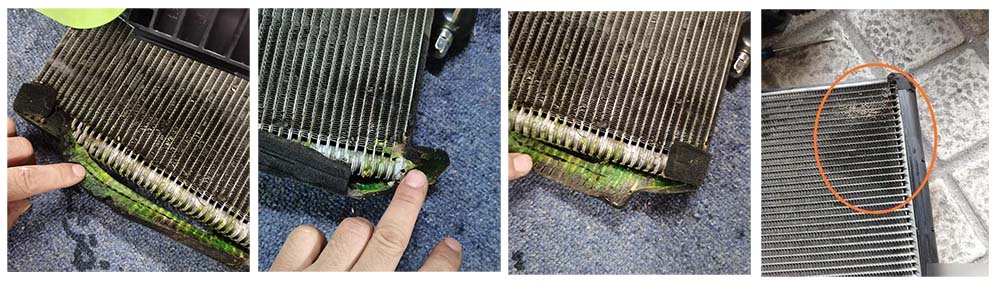
Corrosion: Prolonged exposure to moisture and impurities can cause corrosion in the evaporator,like the evaporator for Honda as below.
Vibration: Vibrations during vehicle operation can lead to cracks in the evaporator welds.
Manufacturing defects: In rare cases, the evaporator itself may have quality issues.


Leaking Evaporator 

2.Limitations of repair:
Difficulty: The evaporator has a complex structure, making it difficult to ensure proper sealing during repairs.
Poor effectiveness: Repaired areas may leak again, and refrigerant leakage can affect the performance of the air conditioning system.
Safety hazards: Refrigerant leakage can be environmentally harmful, and repairs cannot fully resolve the issue.


3.Recommended approach:
Replace the evaporator: This is the most reliable method to ensure the proper functioning of the air conditioning system.
Professional maintenance: It is advisable to visit a specialized repair shop or an authorized dealership for the replacement to ensure proper procedures are followed.
System inspection: During the replacement process, it is recommended to inspect other components of the air conditioning system, such as the compressor and condenser.


4.Preventive measures:
Regular maintenance: Periodically inspect the air conditioning system and replace the air conditioning filter in a timely manner.
Maintain cleanliness: Prevent dust and impurities from entering the air conditioning system to reduce the risk of evaporator corrosion.


In summary, it is generally advisable to replace rather than repair a leaking evaporator to ensure the long-term stable operation of the air conditioning system.

Can I drive my car with a bad evaporator or cooling coil?

2025-04-25

If the car's evaporator is damaged, the vehicle can still be used, but it will face some consequences:


Impaired cooling effect: The evaporator is a crucial component responsible for cooling in the car's air conditioning system. If it is damaged or fails, the air conditioning will not cool properly, resulting in increased interior temperature and compromised passenger comfort.


Potential odor: If the air conditioning system is not cleaned for an extended period, bacteria and mold can accumulate, especially in the evaporator. After the evaporator is damaged, the growth of these microorganisms can cause unpleasant odors inside the car.


Impact on indoor air quality: A damaged evaporator can also lead to the accumulation of dust and microorganisms within the air conditioning system. These substances can enter the car's interior during air circulation, potentially affecting the quality of the indoor air.


It is advisable to promptly inspect and repair the car's evaporator to ensure the proper functioning of the air conditioning system and maintain good indoor air quality. If the damage to the evaporator is not severe, cleaning or simple repairs may be sufficient to restore its functionality. However, if the damage is extensive, replacing the entire evaporator assembly may be necessary.

Car Air Conditioning

How do I know if my car evaporator is bad?

2025-04-25

‌‌Common Fault Symptoms:

Abnormal Cooling Performance:

  • Reduced airflow and lower-than-usual temperatures (even freezing), resulting in poor cooling efficiency.
  • Complete failure of cooling or extremely slow temperature drop.‌


Unusual Odors and Leaks:

  • Detection of refrigerant or refrigerant oil-like smells inside the vehicle.
  • Liquid leakage (e.g., fluorescent dye or refrigerant) from the evaporator drain pipe.


Mechanical and Operational Issues:

  • Compressor operating continuously under high load with noticeable noise or abnormal sounds‌.‌
  • Visible oil stains, carbon buildup, deformation, or corrosion on the evaporator surface.‌


Testing Methods:

Initial Inspection:

  • Visual Examination: Check for cracks, corrosion, or leaks in the evaporator.
  • Temperature Assessment: Measure the temperature at the AC vents. A significant deviation from the normal range (e.g., below 10℃ and weak airflow) may indicate evaporator icing or blockage.


‌‌Professional Diagnostic Tools:‌‌

  • ‌Fluorescent Dye Test‌: Inject fluorescent dye into the refrigerant system and observe leaks via the drain pipe under UV light‌.
  • ‌Fluorine Detector‌: Use a leak detector at vents; an alarm signals refrigerant leakage‌.
  • ‌Pressure Test‌: Measure system pressure with a manifold gauge; abnormal low-side pressure may indicate blockages or damage‌.
  • Leakage Testing: After removing the evaporator, apply pressure and submerge it in water to check for air leakage.


Additional Factors for Consideration:

  • ‌Compressor Behavior‌: Frequent cycling or continuous operation without effective cooling may signal faulty evaporator temperature sensors‌.
  • ‌Vehicle Performance‌: Severe evaporator issues may correlate with reduced engine power or increased fuel consumption due to excessive compressor load‌.


‌Note‌: If symptoms arise, start with visual and temperature checks, then confirm faults using fluorescent dye or pressure tests‌. Timely repair is critical to prevent compressor damage or complete AC system failure.

Evaporator Leak Testing

How to determine if the evaporator is faulty

2025-04-25

The car evaporator (or evaporator coil) is an essential component of the air conditioning system, responsible for absorbing heat from the car's interior and facilitating the evaporation of refrigerant to achieve cooling. When the evaporator is damaged or malfunctioning, it can manifest the following symptoms:


1.Decreased cooling effect: Even with the AC turned on and the fan operating properly, the air blowing out of the vents is not cool or fails to provide any cooling at all. This can be attributed to evaporator leaks, blockages, or internal damage, resulting in reduced heat exchange efficiency.


2.Reduced airflow: The air volume from the air vents noticeably diminishes, even when set to maximum. This could be caused by ice formation on the evaporator's surface (due to refrigerant leaks or temperature control issues), obstructing the airflow.


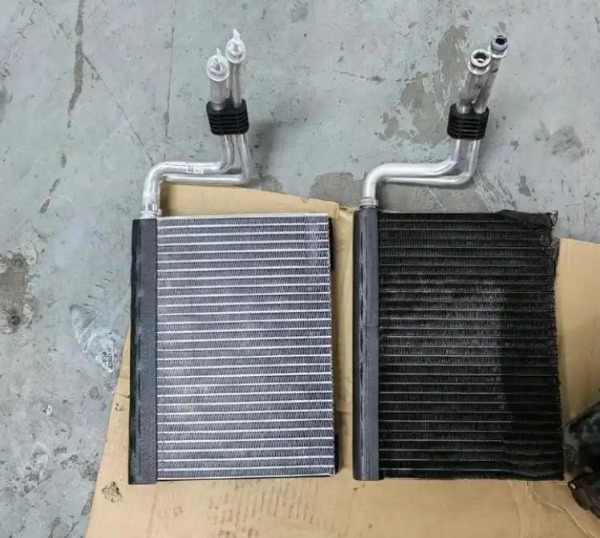
3.Unpleasant odor in the car: A strong musty or sour smell is detectable when the AC is switched on. This can result from prolonged moisture accumulation and mold growth in the evaporator (often caused by clogged drain holes) or the mixing of leaked refrigerant with other odors.For example, the evaporator of this BMW X3 below.


Evaporator of BMW X3 


4.Unusual noises from the AC system: Hissing sounds (indicating refrigerant leaks) or gurgling sounds (suggesting internal blockages) can be heard while the AC is running. It's important to distinguish these noises from those originating from the compressor.


5.Damp or water accumulation on the car's floor: The carpet below the passenger side (where the evaporator is located) feels damp or even collects water. This occurs when the drain pipe of the evaporator is clogged, preventing condensation from properly draining and resulting in backflow into the car interior.


6.Abnormal AC system pressures (requires professional diagnostics): During testing by a repair shop using pressure gauges, abnormal pressures are observed on the high and low sides (e.g., excessively low pressure on the low side). This indicates evaporator leaks or blockages causing improper refrigerant circulation.


Based on the aforementioned symptoms, further confirmation can be obtained through the following methods:

  • Visual inspection: Removing the AC filter or certain control panel components and using an endoscope to examine the evaporator for signs of ice formation, oil stains (indicating refrigerant leaks accompanied by oil leakage), or corrosion.
  • Fluorescent detection: Injecting fluorescent dye into the AC system and inspecting the evaporator under UV light for any leak points.
  • Professional diagnosis: Visiting a repair shop to perform tests using AC pressure gauges, electronic leak detectors, or conducting performance tests on the AC system.


In conclusion, common causes for a malfunctioning evaporator include refrigerant leaks (resulting from corroded or punctured evaporator coils or aging seals), blockages (caused by expansion valve or pipe impurities leading to ice formation), and mold growth (caused by long-term lack of AC system cleaning or poor drainage).


If there is suspicion of evaporator failure, it is recommended to have it repaired promptly to prevent potential damage to the compressor (due to insufficient refrigerant lubrication). The replacement of the evaporator requires dismantling the control panel and incurs higher labor costs, so it is advisable to choose a reputable repair facility. Additionally, it should be noted that certain symptoms (such as lack of cooling) can also be caused by other factors (such as insufficient refrigerant or compressor failure), requiring a comprehensive diagnostic approach.

How to identify the sound of a car evaporator

2025-04-25

‌1. Preparation for Detection Environment

Park the vehicle in a quiet environment, close windows, and turn off audio systems. Start the engine and activate the air conditioning in cooling mode A/C on.Adjust the airflow to medium to ensure the evaporator operates under normal working conditions‌.


2. Sound Identification Methods

‌‌Initial in-cabin auditory inspection‌‌

  • Listen carefully near the air vents inside the cabin for the following sounds:Friction/vibration noises‌: Metallic clanking or grinding sounds may indicate mechanical damage or loose components in the evaporator‌.
  • ‌High-pitched "squeaking"‌: Persistent sharp noises may signal abnormal refrigerant flow through the expansion valve (distinct from normal expansion noises)‌.


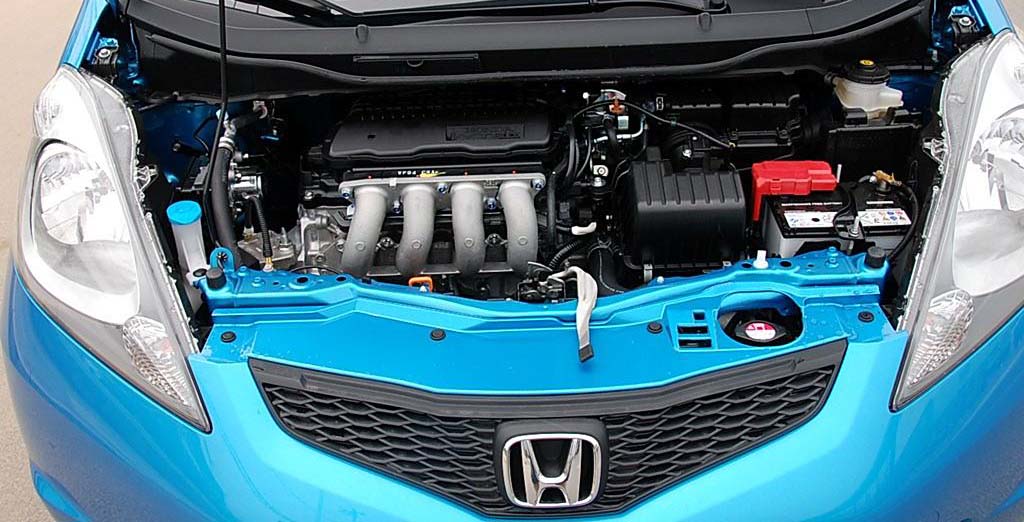
Honda Fit


Auxiliary external inspection‌‌

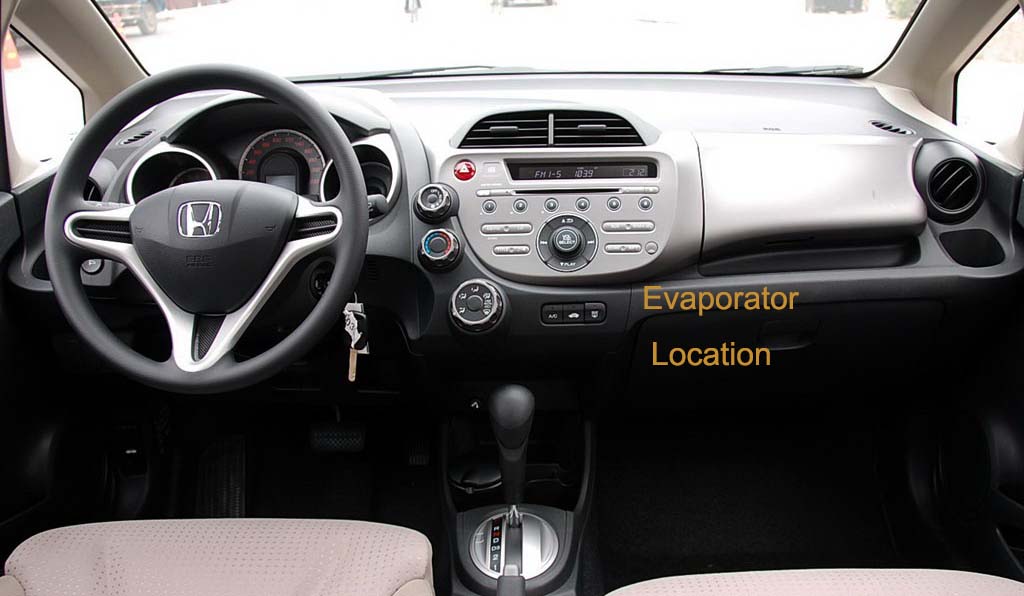
Open the engine hood and locate the evaporator (typically near the firewall under the dashboard,such as the evaporator for Honda Fit 2008 as below). Use a stethoscope or hollow tube pressed against the evaporator housing to isolate abnormal sounds‌.Intermittent "gurgling" or "bubbling" noises may suggest refrigerant circulation issues, blockages, or icing inside the evaporator‌.


Evaporator for Honda Fit

3. Normal vs. Abnormal Sound Comparison

Sound Type

Characteristics

‌Normal expansion valve

 Soft, rhythmic "hissing" that varies with compressor cycling; non-irritating.

‌Abnormal friction/vibration

 Persistent metallic scraping/clanging, often accompanied by steering wheel/dashboard resonance‌.

‌Refrigerant circulation issues

 Flowing water-like sounds, intermittent buzzing, or bubbling due to low refrigerant, ice buildup, or blockages‌.


4. Professional Diagnosis Recommendations

  • Differentiating Interference Factors: The "whooshing" sound of the air conditioning blower and the low hum of the compressor operating normally are both typical.
  • Abnormal Handling: If unusual noises are detected, it is recommended to first check the refrigerant pressure, the surface of the evaporator for ice formation, or use fluorescent dye to detect leaks. If unable to determine the issue independently, professional equipment (such as an electronic stethoscope) should be used to locate the fault point.

How to Replace a Car Evaporator

2025-04-25

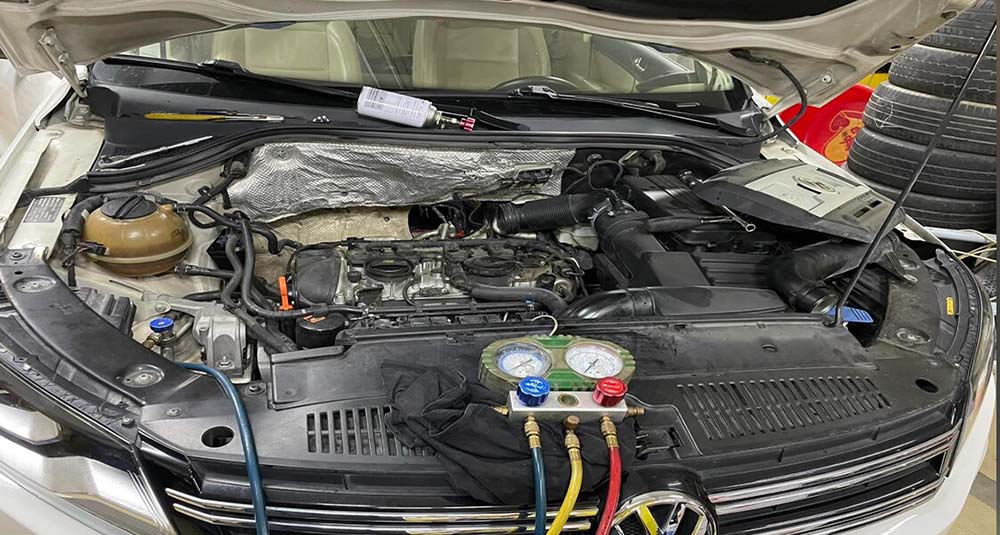
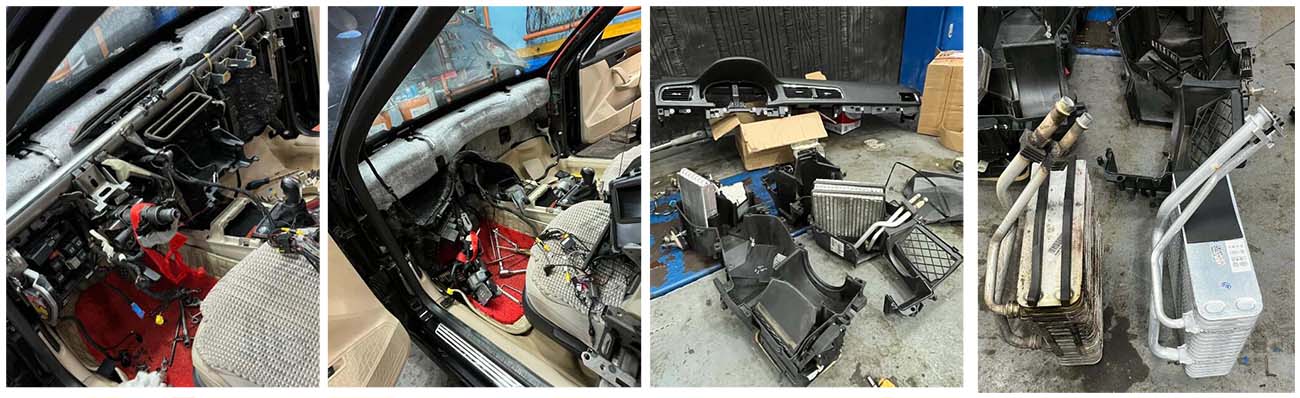
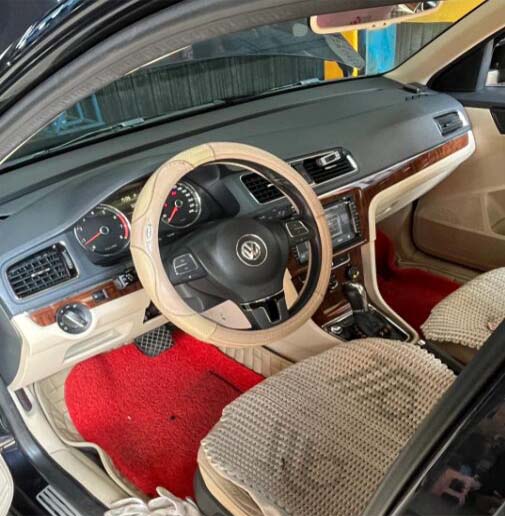
Replacing a car evaporator is a task that requires some technical knowledge and tools. Below is a step-by-step guide to help you understand the process. And the picture that replace the evaporator of Volkswagen Lavida 2009 help you to understand more directly. If you're not confident in your skills, it's recommended to seek professional assistance.


1. Preparation

  • Tools Needed: Screwdrivers, wrenches, refrigerant recovery machine, pressure gauge, vacuum pump, and safety gear.
  •  Ready a new evaporator:Obtain a new evaporator that matches the make, model, and year of your vehicle.
  •  Safety First: Wear gloves and safety glasses. Ensure the car is turned off and the engine is cool.


2. Drain the refrigerant

  • Connect a refrigerant recovery machine to the A/C system and follow the manufacturer's instructions to recover the refrigerant safely.
  •  Release the pressure from the A/C system by opening the high and low pressure valves of the manifold gauge set.


3. Remove Related Components

  • Dashboard Removal: In most cars, the evaporator is located behind the dashboard. Carefully remove the dashboard to access the evaporator.
  • Disconnect Connections: Detach the refrigerant lines and electrical connectors attached to the evaporator.
  • Noted:Detach the mounting bolts or screws that secure the evaporator to the HVAC housing.

 Replace Evaporator of Volkswagen Lavida


4. Remove the Old Evaporator

  • Gently pull and slide the evaporator out of the HVAC housing.
  • Take care not to damage any surrounding components, such as the expansion valve or heater core.


5. Install the New Evaporator

  • Align the new evaporator with the HVAC housing and secure it in place using the mounting bolts or screws.
  • Reconnect the refrigerant lines, electrical connections, and drain hose to the new evaporator.
  • Ensure proper sealing by using new O-rings or gaskets where necessary.


6.Reassemble the A/C system:

  •  Put back the components that were removed initially, such as the dashboard and glove compartment.
  • Double-check all connections and fittings to ensure they are tight and properly secured.


7.Vacuum and recharge the A/C system:

  • Connect a vacuum pump to the A/C system and evacuate any moisture and air for at least 30 minutes.Close the manifold valves and charge the A/C system with the recommended amount of refrigerant according to the manufacturer's specifications.
  • Perform a final leak test to ensure there are no refrigerant leaks.


8. Test the A/C system:

  • Start the engine and turn on the air conditioner to check for proper cooling and operation.
  • Monitor the A/C system for any abnormalities, such as unusual noises or odors.


Volkswagen Lavida 2009

Important Notes

Handle refrigerant carefully, as it can be hazardous.

If you’re unsure about any step, consult a professional mechanic to avoid damaging your car’s air conditioning system.


Tool Checklist

Screwdrivers

Wrenches

Refrigerant recovery machine

Pressure gauge

Vacuum pump


Safety Tips

Always wear protective gear.

Work in a well-ventilated area.

Follow your car’s manual for specific instructions.


Tags